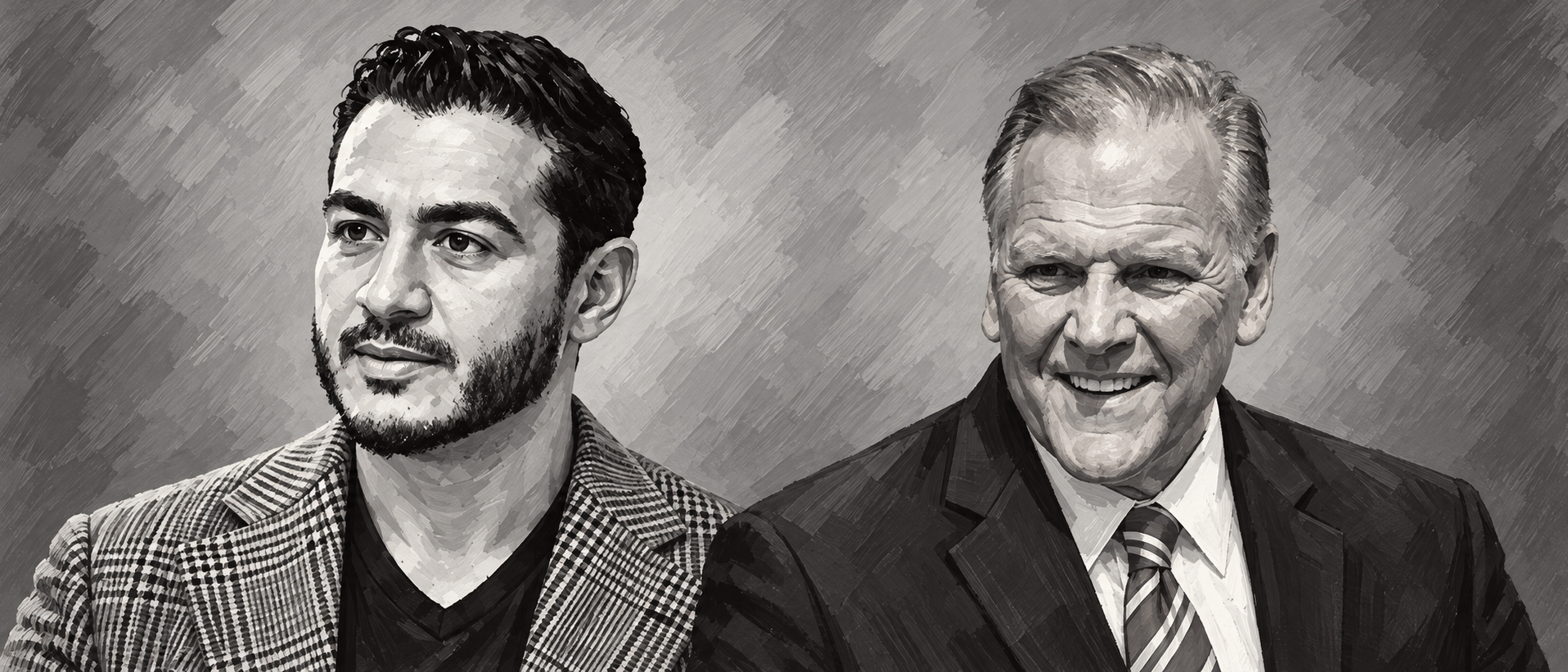
As an epidemiologist, I have spent the better part of my career examining patterns, questioning assumptions, and distinguishing evidence from mere speculation. These principles are fundamental to public health, but they are equally important in evaluating the people we elect to represent us. All. Of. Us.
They are also why I support Dr. Abdul El-Sayed for the United States Senate over former Congressman Mike Rogers.
This election represents more than a choice between two political candidates. It is an opportunity to reconsider what we value in leadership, how we define qualifications, and why certain Americans are still expected to defend their legitimacy before their accomplishments are allowed to enter the conversation.
Records Worth Examining
Abdul El-Sayed is a medical doctor by education, epidemiologist, Rhodes Scholar, and former public health director who has served both Detroit and Wayne County. His professional background reflects an understanding of the relationship between policy, institutional failures, and population health.
As Detroit’s health director, he helped rebuild a department devastated by privatization, expanded public health initiatives, supported overdose prevention, and improved children’s access to vision services. In Wayne County, he helped establish a medical debt relief initiative that has eliminated more than $95 million in medical bills for over 100,000 residents, although the program has not yet reached its original goals (Gibbons, 2026a).
These are tangible accomplishments.
Mike Rogers also has an extensive résumé. He served seven terms in Congress, chaired the House Intelligence Committee, and previously worked for the FBI. That experience deserves acknowledgment. However, experience alone is not evidence of effective representation, nor does longevity automatically justify another opportunity to govern.
Rogers opposed the Affordable Care Act and previously supported several free-trade agreements. He has supported many of President Trump’s tariffs while, more recently (emphasis on recently), calling for an end to the tariff dispute with Canada, which he acknowledges harms Michigan’s automotive industry (McCullough et al., 2026).
El-Sayed, meanwhile, advocates for Medicare for All, a universal healthcare proposal intended to ensure access to medical care regardless of income or employment status. He also supports reducing corporate influence in politics and addressing the economic and social conditions that contribute to poor health outcomes.
That perspective recognizes an essential reality: health does not begin in a hospital. It begins in our homes, workplaces, schools, neighborhoods, and the policies governing them.
Where the Candidates Stand: Key Policy Differences
The following comparison summarizes the candidates’ publicly stated positions on major issues affecting Michigan residents as of October 2026 (Axios Detroit, 2026; Bridge Michigan, 2026; Friel, 2026).
| Issue | Abdul El-Sayed (D) | Mike Rogers (R) |
|---|---|---|
| Healthcare | Supports Medicare for All, a universal single-payer healthcare system. | Opposes Medicare for All; emphasizes healthcare price transparency and market-based approaches. |
| Economy and Jobs | Supports stronger antitrust enforcement, labor unions, and policies aimed at reducing household costs. | Emphasizes tax relief, domestic manufacturing, skilled trades, and expanding energy production. |
| Trade and Tariffs | Supports targeted tariffs but criticizes Trump’s broad tariff approach. | Supports some tariffs to protect manufacturing but has called for ending the tariff dispute with Canada. |
| Abortion and Reproductive Rights | Supports federal protections for abortion access, including restoring Roe-era protections. | Supports leaving abortion regulation primarily to individual states. |
| Immigration | Supports border security and a pathway to citizenship; proposes replacing ICE with a different enforcement structure. | Supports stronger border enforcement, ICE operations, and deportations of immigrants who commit serious crimes. |
| Climate and Environment | Supports renewable energy, environmental protections, and stronger action against polluters. | Emphasizes domestic energy production and reducing regulatory burdens. |
| Housing | Supports restricting corporate purchases of residential homes and expanding housing affordability. | Supports reducing construction regulations and encouraging homeownership. |
| Foreign Policy | Opposes the Iran war and supports restricting U.S. military aid to Israel. | Supports Israel and emphasizes national security threats from Iran; has also called for ending the Iran war. |
| Voting Rights | Opposes the SAVE Act and supports expanding ballot access. | Supports stricter voter identification requirements and the SAVE Act. |
| Professional and Government Experience | Former Detroit and Wayne County public health director; medical and epidemiology background. | Seven-term congressman, former House Intelligence Committee chair, and former FBI agent. |
Note: These descriptions summarize publicly reported positions rather than predicted legislative outcomes. Some proposals would require congressional approval, and implementation details may change.
When Religion Becomes a Political Weapon
Perhaps the most disturbing feature of this race has been the attempt to turn El-Sayed’s Muslim identity into evidence of dangerousness.
Rogers and other Republicans have repeatedly raised allegations concerning the Muslim Brotherhood despite no substantiated evidence that El-Sayed is affiliated with the organization. PolitiFact determined that Rogers falsely claimed El-Sayed had failed to disavow the group when video demonstrated that he explicitly had (McCullough, 2026).
Critics have pointed to a 2012 statement El-Sayed signed supporting Egypt’s elected president, Mohamed Morsi, who was affiliated with the Muslim Brotherhood. However, the statement supported Morsi’s elected government, not membership in or allegiance to the organization. El-Sayed has repeatedly denied such affiliation.
Furthermore, demanding that Abdul El-Sayed denounce the Muslim Brotherhood simply because he is Muslim is akin to demanding that Mike Rogers denounce the Ku Klux Klan simply because he is a white Christian. Perhaps we should start making that demand, if only to expose the absurdity of the double standard.
Neither a shared religious identity nor a perceived cultural association establishes ideological allegiance. Yet, one candidate is expected to repeatedly disprove an affiliation for which there is no evidence, while the other enjoys the presumption of innocence. It’s a transparent attempt to sneak a little age-old, intellectually lazy, and frankly boring fearmongering into a political contest that should be decided on qualifications, policy, and public service.
And the hypocrisy extends far beyond this election.
Consider the Catholic Church’s extensive history of clergy sexual abuse, institutional concealment, financial settlements, and the reassignment of abusive priests. A 2018 Pennsylvania grand jury investigation identified more than 300 accused priests and over 1,000 child victims, documenting systemic efforts to conceal abuse (Pennsylvania 40th Statewide Investigating Grand Jury, 2018).
Yet, we generally recognize that these crimes, however horrific, do not establish the moral character of every Catholic, much less every Christian. Why, then, does a Muslim candidate’s faith become grounds for collective suspicion?
I would argue that Christianity, particularly within historically white-dominant American institutions, has enjoyed a cultural presumption of legitimacy that Muslims are too often denied. Muslim Americans can find themselves expected to establish their patriotism, explain their religion, and repeatedly disavow organizations with which they have no demonstrated connection. It is a hierarchy of presumed culpability.
And it needs to end.
Meritocracy Should Not Be Selective
America, particularly in recent years, has increasingly emphasized the ideal of meritocracy: the notion that opportunity and advancement should be determined by ability, achievement, and effort rather than inherited privilege or identity.
But, how can we claim to uphold meritocracy when a highly educated, accomplished American must continually defend his American identity simply because of his name and religion? After all, being “American” is not synonymous with being white, blond, or Christian.
El-Sayed has earned degrees, conducted research, published scholarship, directed public health institutions, and managed initiatives affecting thousands of Michigan residents.
We can reasonably disagree with his policy proposals. We can examine the outcomes of his leadership and hold him accountable for shortcomings. That is precisely what an informed electorate should do.
However, dismissing those qualifications because he is Muslim makes a mockery of the very meritocratic principles Americans claim to cherish. If we believe in merit, we must believe in it wholeheartedly, sincerely, and impartially, including when accomplished people do not look, worship, or think like those historically entrusted with power.
A Coalition That Recognizes the Stakes
El-Sayed’s candidacy has earned support from prominent political leaders and organizations, including Barack Obama, Alexandria Ocasio-Cortez, Bernie Sanders, the United Auto Workers, and National Nurses United (Gibbons, 2026b; National Nurses United, 2026; Solis, 2026).
Rogers has secured endorsements from Donald Trump, Senate Majority Leader John Thune, Senator Tim Scott, and several business and law enforcement organizations (Solis, 2026; Rogers for Senate, 2026).
Beyond endorsements, El-Sayed has engaged Black community leaders, Jewish voters, and residents across Michigan, building on his public health work in Detroit and Wayne County. Rogers expanded his Detroit outreach in October, opening a campaign office and supporting a gas-card giveaway organized by his wife. He also declined a September debate invitation before participating in two October debates.
For me, meaningful public service extends beyond endorsements and campaign appearances. It means expanding healthcare access, protecting constitutional rights, and improving quality of life. I believe in the Constitution, its system of checks and balances, and the fundamental right to due process, not a police state where law enforcement acts as judge and jury. Mental health emergencies warrant specialized crisis-response services, just as border enforcement demands organization, accountability, and humanity.
Michigan Deserves Change, Not Another Trump Loyalist
Michigan does not need another politician whose loyalty to Trump outweighs independent judgment. We need leadership that prioritizes public health, economic stability, and measurable improvements in quality of life.
I support El-Sayed not simply because we share a profession, but because his approach to leadership reflects the importance of evidence, public service, and accountability.
Someone being different from you does not inherently make them dangerous. I truly believed we had evolved beyond such rudimentary, black and white, thinking. Or perhaps the problem here is that given the current state of affairs, not much thinking is happening at all.
Fear doesn’t drive me. The pursuit of better health and quality-of-life outcomes does.
It’s time for positive, collective change.
That’s what I’m voting for.
Michigan Voting Information: November 3, 2026
Regardless of political affiliation, Michigan residents can use the following resources to participate in the general election.
Election Day: Tuesday, November 3, 2026.
Polling hours: 7:00 a.m.–8:00 p.m. Voters in line by 8:00 p.m. can still cast a ballot.
Early voting: October 24–November 1, with some communities offering additional days.
Voter registration: The online and mail registration deadline was October 19. Eligible residents may still register in person through Election Day at their city or township clerk’s office with proof of residency.
Absentee voting: Michigan voters can request an absentee ballot without providing a reason. For most voters, completed ballots must reach their clerk by 8:00 p.m. on Election Day. Returning a ballot directly to the clerk or an authorized drop box avoids potential mailing delays.
Voter identification: Bring an accepted photo ID if available. Voters without one may sign an identification affidavit.
Find your polling place, registration status, early voting location, and local clerk:
Accessible Voting and Transportation Assistance
Michigan provides accessible voting equipment, curbside voting, accessible absentee ballot options, and voting assistance for individuals with disabilities.
Michigan Accessible Elections Ombudsperson
Phone: 517-335-2730
SMART Paratransit — Metro Detroit Suburbs
Reservation-based transportation is available to eligible riders in participating suburban communities. Confirm eligibility and service area before booking. SMART Connector reservations generally must be made by 4:00 p.m. on the preceding business day.
Phone: 866-962-5515
Michigan 211 — Transportation Resources
Dial 211 to locate community transportation, senior ride services, and disability-related assistance. Election-specific transportation is not guaranteed.
Detroit Bus Company — Election Day Group Rides
The Detroit Bus Company has advertised free group rides for participating organizations and communities in Detroit, Hamtramck, and Highland Park. Registration is required by November 2. Confirm current availability and accessibility directly with the organizer.
Election Protection Hotline
For voting difficulties or questions about your rights:
866-OUR-VOTE (866-687-8683)
References
Brouillet, A. (2026, July 24). President Trump endorses Mike Rogers for U.S. Senate. Rogers for Senate. https://rogersforsenate.com/news/president-trump-endorses-mike-rogers-for-us-senate
Fritz, W. (2026, October 26). Mike Rogers’ wife distributed $10 gas cards at Freedom Fuel gas station in Detroit. The Michigan Independent. https://michiganindependent.com/politics/mike-rogers-wife-distributed-10-gas-cards-at-freedom-fuel-gas-station-in-detroit/
Gibbons, L. (2026b, October 24). Fact checks, takeaways: Barack Obama blasts Trump, touts El-Sayed, in Detroit. Bridge Michigan. https://bridgemi.com/michigan-government/fact-checks-takeaways-barack-obama-blasts-trump-touts-el-sayed-in-detroit/
Jackson, C. (2026, October 18). Republican U.S. Senate candidate Mike Rogers opens first Detroit field office. Michigan Public. https://www.michiganpublic.org/politics-government/2026-10-18/republican-u-s-senate-candidate-mike-rogers-opens-first-detroit-field-office
Lapin, A. (2026, October 21). El-Sayed campaign hires Jewish outreach director. Jewish Telegraphic Agency. https://www.jta.org/2026/10/21/politics/el-sayed-campaign-hires-jewish-liaison
McCullough, C. (2026, October 19). Mike Rogers said Abdul El-Sayed didn’t disavow the Muslim Brotherhood. Video shows he did. PolitiFact. https://www.politifact.com/factchecks/2026/oct/19/mike-rogers/el-sayed-muslim-brotherhood-michigan-senate/
McCullough, C., Tuquero, L., & Briceño, M. (2026, October 21). Fact-check: Abdul El-Sayed, Mike Rogers debate NAFTA, Medicare for All, Social Security. PolitiFact. https://www.politifact.com/article/2026/oct/21/michigan-senate-abdul-el-sayed-mike-rogers-debate/
Meyers, E. (2026, September 1). Abdul El-Sayed meets with Black leaders in Downriver area for roundtable discussion. CBS Detroit. https://www.cbsnews.com/detroit/news/abdul-el-sayed-black-leaders-downriver/
National Archives. (n.d.). The Constitution: Amendments 11–27. https://www.archives.gov/founding-docs/amendments-11-27
National Nurses United. (2026, April 28). National Nurses United endorses Abdul El-Sayed to represent Michigan in U.S. Senate. https://www.nationalnursesunited.org/press/national-nurses-united-endorses-abdul-el-sayed-to-represent-michigan-in-us-senate
Pennsylvania 40th Statewide Investigating Grand Jury. (2018). Report of the 40th statewide investigating grand jury. Administrative Office of Pennsylvania Courts. https://www.pacourts.us/Storage/media/pdfs/20230515/193052-40thgrandjuryreport.pdf
Solis, B. (2026, July 2). Abdul El-Sayed had a big week of U.S. Senate primary endorsement leaps and stumbles. Michigan Advance. https://michiganadvance.com/2026/07/02/abdul-el-sayed-had-a-big-week-of-u-s-senate-primary-endorsement-leaps-and-stumbles/
Ziegler, M. (2026, September 15). Senate debate: Mike Rogers declined, Abdul El-Sayed confirmed. FOX 2 Detroit. https://www.fox2detroit.com/news/mike-rogers-abdul-el-sayed-debate-detroit-senateGibbons, L. (2026a, September 25). Abdul El-Sayed under microscope: His record, from public health to podcasts. Bridge Michigan. https://bridgemi.com/michigan-government/abdul-el-sayed-under-the-microscope-from-public-health-to-politics/
Additional Candidate Comparison Sources
Axios Detroit. (2026, October 7). Michigan U.S. Senate race: 1-minute voter guide. https://www.axios.com/local/detroit/2026/10/07/senate-race-1-minute-voter-guide-2026
Bridge Michigan. (2026). Mike Rogers vs. Abdul El-Sayed: 7 issues defining Michigan’s US Senate race. https://bridgemi.com/michigan-government/mike-rogers-vs-abdul-el-sayed-7-issues-defining-michigans-us-senate-race/
Friel, N. (2026, October 21). Rogers, El-Sayed battle over immigration, health care, and Iran in Michigan Senate debate. Local 4. https://www.clickondetroit.com/news/local/2026/10/22/rogers-el-sayed-battle-over-immigration-health-care-and-iran-in-senate-debate/
Voting and Accessibility Resources
Michigan Department of State. (2026). How to vote in Michigan. https://www.michigan.gov/sos/elections/voting
Michigan Department of State. (n.d.). Accessibility and accommodations. https://www.michigan.gov/sos/resources/accessibility-and-accommodations
Michigan 211. (n.d.). Transportation. https://mi211.org/transportation
SMART. (n.d.). Paratransit. https://www.smartbus.org/Services/Paratransit
The Detroit Bus Company. (2026). Vote Rides 2026. https://thedetroitbus.com/vote-rides/



Leave a Reply