
Let’s start with the uncomfortable truth: it is absolutely insane that the expectation right now is for daily life to continue in America as though nothing is happening.
People are being detained, harmed, stripped of due process, and gaslit in real time. And yet, we are told to keep working, keep consuming, keep scrolling, keep producing. That disconnect is not accidental. It is emblematic of how thoroughly this country has been hollowed out and repackaged as a corporation, not a democracy.
Corporations do not exist to protect people. They exist to extract from them.
If there is a silver lining, it’s this: in the same way an ethical hacker is hired to deliberately probe a firewall and expose its weakest points, this administration is stress-testing the system so aggressively that its failures can no longer be denied. The vulnerabilities are no longer theoretical. The cracks are visible. The complicity is traceable. And for those paying attention, it has become unmistakably clear where they stand and which side of history they’re on.
Two distinct forces have clearly taken control of the ship:
- Corporate greed
- Panic over the perceived loss of white dominance
That second force matters because it explains how power is being exercised. When demographic panic drives policy, enforcement becomes less about law and more about signaling. Rules are applied aggressively, selectively, and publicly, not to uphold justice, but to demonstrate who still holds control.
This is where enforcement enters the picture.
One of the most dangerous myths in a democracy is the belief that laws enforce themselves. They do not. Rights only exist if they are enforced. Protections only matter if violations have consequences. One of the clearest strategies of this administration has been to test whether anyone will actually insist that the law be enforced evenly or at all.
Against that backdrop, recent events are no longer abstract. Federal immigration enforcement actions during 2025 and 2026 have resulted in the deaths of U.S. citizens Keith Porter, Jr., Renée Good, and Alex Pretti, triggering protests, investigations, and widespread concern about federal authority, use of force, and accountability.
At the same time, a disclosed internal memo (1, 2) revealed that ICE agents were authorized to enter private homes without a judicial warrant, openly challenging Fourth Amendment protections.
These actions are not random. They are stress tests of the law, of institutions, and of whether the public remembers what the Constitution actually says.
The Constitutional Reality: What the Government Can and Cannot Do
Much of the current confusion rests on a basic misunderstanding of constitutional protections.
The Constitution does not reserve due process for citizens alone. It repeatedly uses the word “persons.” That distinction is deliberate.
1. Due Process Applies to Persons — Not Just Citizens
The Fifth and Fourteenth Amendments guarantee due process to persons, not citizens. That means constitutional protections apply to anyone under U.S. jurisdiction, regardless of immigration status.
Due process includes:
- Protection from arbitrary detention
- The right to notice and a hearing
- Protection against unlawful searches and seizures
When enforcement practices ignore these protections, they are not merely harsh — they are unconstitutional.
This matters because once the public accepts that some people fall outside the law’s protection, the law itself begins to erode.
2. The Executive Branch Cannot Override the Constitution
Even When It Acts Like It Can
Federal agencies, including ICE, derive their authority from statutes passed by Congress. They do not derive enforcement power directly from the Constitution.
Internal memos or policy shifts do not override:
- Fourth Amendment protections
- Due process guarantees
- Judicial precedent
They test whether anyone will intervene.
A right that is not defended becomes optional.
3. Courts Still Matter, But They Are Not Self-Enforcing
Courts can restrain unconstitutional action. Judges issue binding orders. Legal records are created.
Across the Trump administration—past and recent—courts have repeatedly ruled in favor of the public: blocking discriminatory immigration orders, stopping unlawful funding reallocations, protecting census integrity, halting family separation practices, and ordering compliance with due process in immigration enforcement.
But, courts do not enforce their own rulings. They rely on compliance, or intervention, by other branches. When orders are ignored, delayed, or slow-walked, Congress is supposed to step in.
This is where the system has faltered most visibly.
4. Congress Controls the Laws and the Money — And This Is Where Pressure Must Be Applied
Congress writes the laws. Congress controls federal funding. Congress has subpoena power, oversight authority, and the ability to restrain executive overreach.
And yet, as people (including U.S. citizens) are killed, detained, and denied basic protections, Congress has largely failed to assert its role. Oversight has been cautious. Accountability has been deferred. Statements have replaced action.
That is not neutrality. It is abdication.
Laws without enforcement are promises without meaning. And when Congress refuses to enforce limits on executive power, it signals to agencies that violations will be tolerated.
This is where public pressure matters most.
A Direct Call to Action: Pressure Congress to Do Its Job
Every state has two U.S. Senators. Both represent you. Both are accountable to you.
You also have one U.S. House Representative whose job includes oversight of federal agencies.
Congress does not act because it is morally persuaded.
It acts when inaction becomes politically uncomfortable.
What to do
- Call both U.S. Senators from your state
- Call your U.S. House Representative
- Leave a voicemail if no one answers
- Follow up with an email using the same language
Staffers log calls. Volume matters. Consistency matters.
What to say (Script)
“Hello, my name is [NAME], and I am a constituent. I’m calling to demand immediate congressional oversight of federal immigration enforcement practices, including the use of force, due process violations, and warrantless home entry.
I am also calling to demand the full public release of all Epstein-related files and investigations. These are constitutional accountability issues, not political distractions.
Congress has the authority to investigate, subpoena, and condition funding. I expect my representatives to use those powers. Silence and delay are unacceptable.
Please log my call and inform the Senator/Representative that I am watching their response closely.”
Do not debate. Do not apologize. Hang up when finished.
5. Document Everything: Recording Is Legally Permitted
There should be no confusion here.
It is legally permitted to record law enforcement officers, including ICE and federal agents, when they are performing their duties in public spaces. This is protected activity under the First Amendment, so long as you do not directly interfere.
If you witness unlawful/unconstitutional enforcement activity:
- You may record video or audio
- You may photograph agents, vehicles, and badge numbers
- You may take notes openly
If recording is unsafe or impractical:
- Write everything down immediately
- Note time, location, badge numbers, vehicle markings, and sequence of events
Even with clear, undeniable video evidence, this administration has attempted to distort facts and gaslight the public.
Records protect reality. Documentation is not provocation. It is a form of accountability that those being paid via our tax dollars shouldn’t fear if they’re not doing anything wrong. Furthermore, it signals that people are paying attention and are not disengaged or willing participants in the violation of ‘persons’ on U.S. soil under the U.S. Constitution.
6. Use Your Spending Power
Money is leverage.
Do not spend a cent where you are not wanted, or better yet, celebrated.
Support businesses and institutions that defend civil rights. Withdraw support from those that enable harm, even when it causes minor inconvenience.
I will be compiling:
- A list of places to avoid
- A list of alternative places to support
Spending is endorsement. Silence is complicit consent.
If You Are Considering Leaving
For some, staying and fighting makes sense. For others, leaving is survival. Both are valid.
For single people
- Work visas (e.g., Spain, Portugal, Thailand, Mexico)
- Digital nomad visas
- Residency-by-investment programs
For Families
- Education-based pathways
- Family reunification options
- Countries with strong healthcare and safety systems
More detailed, step-by-step relocation guidance is coming.
What This Moment Reveals and Why Accountability Still Matters
When institutions fear transparency, pay attention.
When enforcement ignores limits, those limits become fault lines.
There is no hierarchy of humanity, no matter how loudly bigots insist otherwise.
The Constitution does not rank lives by race, immigration status, or political convenience. Equal protection is the premise. When Congress fails to act even when people are harmed, it exposes not just political weakness, but moral collapse.
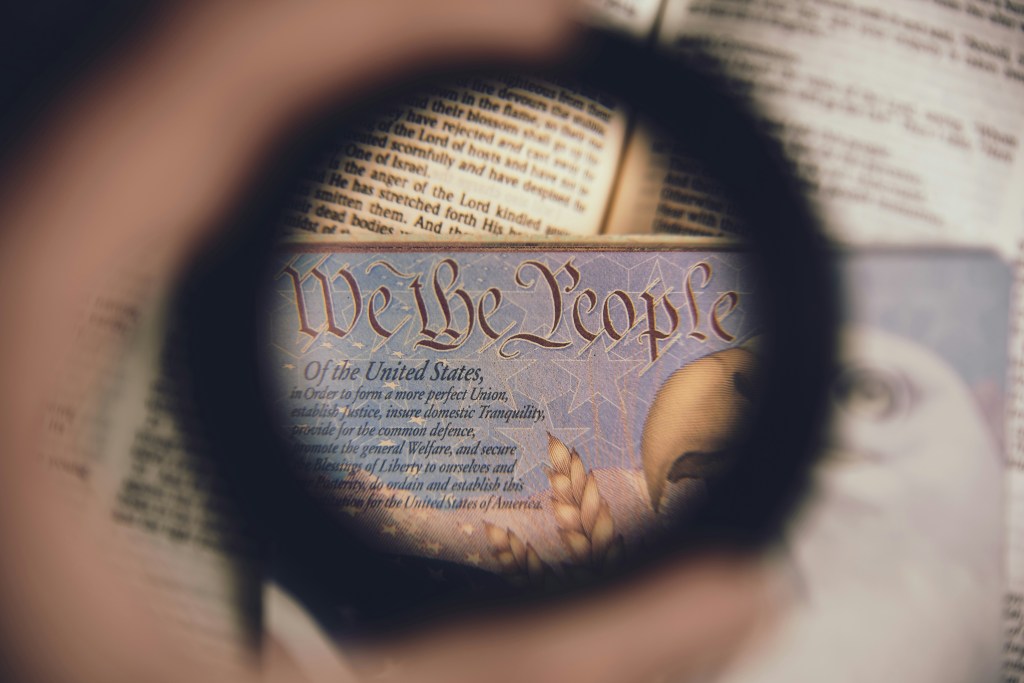
And if parts of this system crumble, it will not be because We, The People stood up.
It will be because too many of us were told that standing up was pointless and we believed it.
Standing up does not always have to look dramatic.
Sometimes it looks like taking notes, pressing the record button, saving evidence to a hard drive, and redirecting your hard-earned dollars.
Those acts accumulate collectively.
Hang in there.
But, it’s okay to leave room for the expression of your humanity during times when others try to strip you of it.
Feeling something means you still care and that is true strength.
Cruelty requires far less from us than humanity does.
Sources
American Civil Liberties Union. (n.d.). Know your rights. https://www.aclu.org/know-your-rights
American Civil Liberties Union. (2022, April 8). You have the right to record law enforcement officers including at the border. https://www.aclu.org/news/free-speech/you-have-the-right-to-record-law-enforcement-officers-including-at-the-border
American Immigration Council. (2024). Title of specific report on due process and immigration enforcement. [Replace with actual report URL and title] Retrieved from https://www.americanimmigrationcouncil.org
Brennan Center for Justice. (n.d.). Congressional oversight powers and executive accountability. [Replace with exact report/page URL] Retrieved from https://www.brennancenter.org
Chemerinsky, E. (2019). Constitutional law: Principles and policies (6th ed.). Wolters Kluwer.
Glik v. Cunniffe, 655 F.3d 78 (1st Cir. 2011).
Kagan, E. (2016). Presidential administration. Harvard Law Review, 114(8), 2245–2385.
Zuboff, S. (2019). The age of surveillance capitalism: The fight for a human future at the new frontier of power. PublicAffairs.
Note: For constitutional text…
U.S. Const. amend. I, IV, V, XIV.
 Lence in Layers