
There are years when awards debates come down to taste, and then there are years when the distance between what moved the culture and what was rewarded is too wide to ignore. The most recent Critics Choice Awards made that gap especially clear.
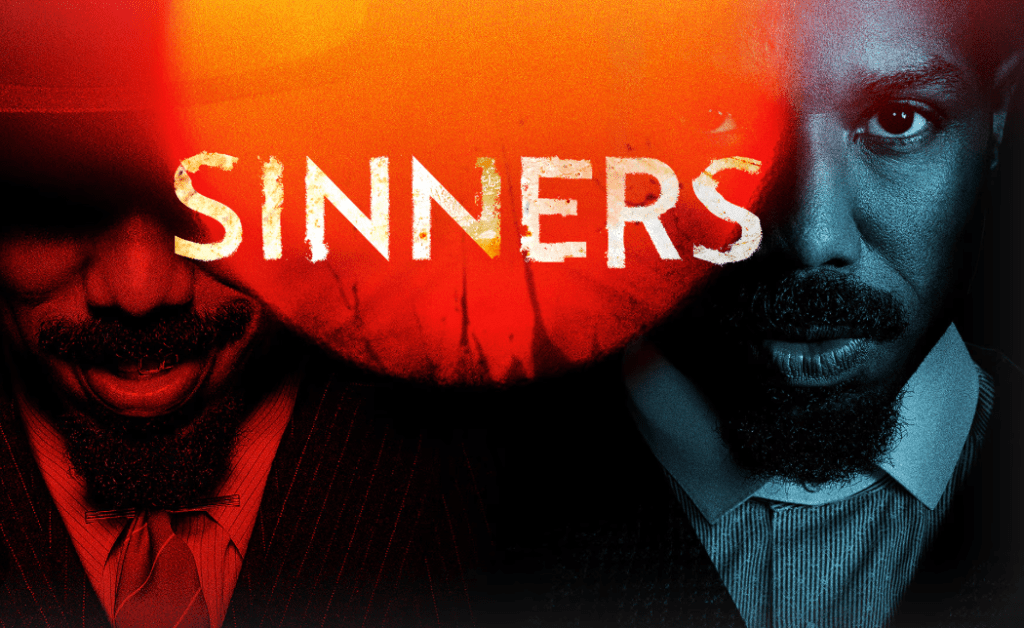
With Sinners, Ryan Coogler delivered a film that fused Southern Gothic horror, Black musical lineage, American history, and myth into a single cinematic language that felt both new and inevitable. It was risky, original, and unapologetically ambitious. At the center of it all was Michael B. Jordan, whose performance required multiplicity, restraint, physical command, and moral gravity—often all at the same time.
By contrast, Marty Supreme, and the awards momentum behind Timothée Chalamet, represented something far more familiar: a polished, well-campaigned performance that fit comfortably within the industry’s long-standing definition of prestige. That comfort matters, because awards don’t just recognize excellence. They signal which kinds of stories are treated as noteworthy and which expressions of power are considered safe, legible, and worthy of elevation.
Box Office as Cultural Evidence
This isn’t an argument that box office revenue determines artistic merit. It’s an argument that reach and resonance are relevant when evaluating how a film performs and its broader impact on the cinematic ecosystem
Under Ryan Coogler’s direction, Sinners grossed roughly $279.7 million domestically and $368 million worldwide, an uncommon result for an original, R-rated, Black-led film that deliberately challenged genre and form. Marty Supreme, released in December 2025, earned about $60 million worldwide, a solid showing for a character-driven drama positioned during awards season.
Coogler’s intent to innovate and expand the cinematic language was matched by Michael B. Jordan’s grounded, disciplined performance—one that supported the film’s larger vision rather than competing with it. When direction and performance operate in tandem, their impact becomes inseparable from the film’s cultural reach dollar for dollar.
Preserving the System vs Advancing the Form
Marty Supreme succeeds on clarity. Timothée Chalamet plays a sharply defined character whose story is driven by ambition, ego, and self-invention. His performance is expressive and precise, built around visible emotional shifts and a familiar rise-and-fall arc. It’s the kind of acting that invites close attention and rewards individual moments—exactly the sort of performance awards bodies have long been trained to recognize.
Sinners asks for a different kind of engagement. Rather than centering a single character’s inner turmoil, the film builds meaning through atmosphere, history, and collective experience. Michael B. Jordan’s performance reflects that choice. His work is restrained and deliberate, rooted in authority in spaces where authority is rarely granted. Power emerges not through spectacle, but through presence as Smoke, Stack, and, *spoiler alert* Stack’s transformation into a vampire each confront fear and push against the limits imposed on body and mind in pursuit of freedom.
That distinction matters. One performance shines by drawing focus inward. The other works by anchoring something broader. Both are skilled, but they operate on different terms and only one of those approaches asks the system itself to stretch.
The Scene That Folded Time
If there were any doubt about the Sinners’ innovation, it vanished during the juke-joint sequence *spoiler alert* when Sammie aka Preacher Boy’s music fractures time. Past, present, and future collide as Black sound becomes both ancestral memory and prophecy, the veil lifted by voice. Making it crystal clear that black art isn’t peripheral to American history. It is the throughline. Moments like this are why Sinners will be referenced and revisited for decades to come. They expand the language of American cinema rather than simply rearranging it and rendering it more easily digestible.
The Quiet Politics of Omission
And yet, despite Sinners’ impact, the film was conspicuously absent from Rolling Stone’s year-end “best of” list, while Marty Supreme made the cut, despite being released just a week before the New Year. Lists aren’t sacred, but patterns are telling.
At a certain point, this raises a larger question: whether Black artists, and artists from other non-mainstream cultures, should continue measuring success primarily through the approval of white mainstream media in America, or whether it’s time to innovate and evaluate work on our own terms. Efforts to do just that have long existed, through institutions like the BET Awards, Black-led festivals, and independent critical spaces that center excellence without dilution. Those avenues matter, and they have played an essential role in recognition and preservation.
This isn’t a question unique to Black culture. It applies to any culture outside the mainstream, especially those that speak honestly about American imperialism and the historical oppression and exploitation of people of color. When validation flows through institutions shaped by colonial hierarchies, omission becomes less surprising and less instructive. On a global scale, reception can look different, even while acknowledging how deeply those same hierarchies still shape taste and cultural order.
It’s easy to brush this tension aside with a casual “art is subjective.” It’s harder to be honest about what real accomplishment actually feels like. Because the most meaningful wins aren’t symbolic or performative, they come from knowing you gave everything you had and pushed both the work and yourself to the edge of what was possible. That kind of effort builds a pride that lasts and a deeper joy that comes from having made something impactful, not just being told you’ve won
Why This Feels Like Punishment, Not Preference
This pattern of exclusion isn’t about talent or a lack thereof. It’s about which portrayals are deemed worthy of reward and more notably by whom. One of the clearest examples is Halle Berry’s masterful, restrained portrayal of Dorothy Dandridge in Introducing Dorothy Dandridge in 1999. Rooted in artistry, ambition, and structural constraint, the performance earned acclaim, but no Oscar. Three years later, Berry won for Monster’s Ball, a role defined by desperation, sexual exposure, and deep suffering. The contrast is stark and instructive.
Black Oscar Acting Wins by Year and Role Type
The table below presents Black Oscar–winning performances in chronological order, alongside the types of roles being recognized. Viewed together, the data highlights recurring patterns in which portrayals have historically received institutional acclaim.
| Year | Winner | Category | Film | Role Type |
|---|---|---|---|---|
| 1940 | Hattie McDaniel | Supporting Actress | Gone with the Wind | Struggle / Containment (enslavement) |
| 1964 | Sidney Poitier | Lead Actor | Lilies of the Field | Upstanding / Cultured |
| 2002 | Denzel Washington | Lead Actor | Training Day | Gangster / Criminalized |
| 2002 | Halle Berry | Lead Actress | Monster’s Ball | Struggle / Sexualized |
| 2005 | Jamie Foxx | Lead Actor | Ray | Struggle / Addiction |
| 2007 | Forest Whitaker | Lead Actor | The Last King of Scotland | Gangster / Tyrant |
| 2014 | Lupita Nyong’o | Supporting Actress | 12 Years a Slave | Struggle / Containment (enslavement) |
| 2017 | Viola Davis | Supporting Actress | Fences | Struggle / Emotional Labor |
| 2017 | Mahershala Ali | Supporting Actor | Moonlight | Struggle / Marginalization |
| 2019 | Regina King | Supporting Actress | If Beale Street Could Talk | Struggle / Trauma |
| 2019 | Mahershala Ali | Supporting Actor | Green Book | Cultured but Contained |
| 2021 | Daniel Kaluuya | Supporting Actor | Judas and the Black Messiah | Political Struggle / Criminalized framing |
| 2022 | Will Smith | Lead Actor | King Richard | Upstanding / Empowered |
| 2024 | Da’Vine Joy Randolph | Supporting Actress | The Holdovers | Struggle / Emotional Labor |
Summary
| Role Category | Count (n) | Percent (%) |
|---|---|---|
| Struggle / Containment | 9 | 64.3% |
| Gangster / Criminalized | 3 | 21.4% |
| Upstanding / Empowered / Cultured | 2 | 14.3% |
| Total | 14 | 100% |
Interpretation:
Nearly two-thirds of Black Oscar wins are associated with roles defined primarily by struggle, criminal behavior, or suffering. Roles depicting autonomy, leadership, or dignity account for fewer than 1 in 6 wins.
Black actors are disproportionally rewarded when their characters are broken, eroticized, or absorbed into narratives of degradation, and far less often when they embody authority, dignity, and self-determination. Jordan’s work belongs firmly in the latter category, which is precisely why its lack of recognition reads less like oversight and more like correction.
Final Thoughts
Marty Supreme will likely be remembered as a strong film buoyed by a successful awards narrative. Sinners, by contrast, will be remembered as a work that shifted the cinematic terrain in ways that were previously unimaginable, no matter how well it does this upcoming award season. And I haven’t even touched its soundtrack.
Still, I must reiterate that not everything is “subjective.” Some distinctions are structural and when certain bodies of work are undermined, it often says less about the piece being sidelined than it does about the insecurity of the system doing the sidelining. Substance does not need validation to endure. Black-American art and culture are proof.
After all, there is a difference between the man who convincingly plays Superman and Superman in the flesh. And when the next world-ending threat arrives, it matters that we accept, clearly and humbly, which one we’re sending to fight on our collective behalf.
 Lence in Layers