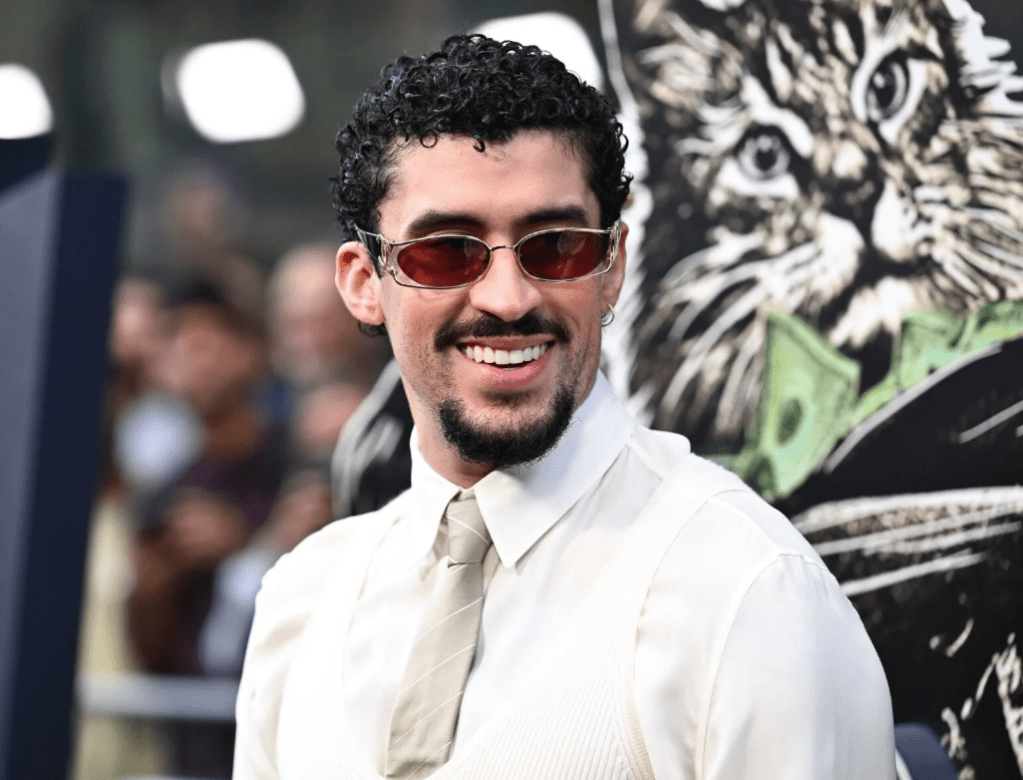
There are moments when representation reminds the world of its blind spots. Bad Bunny’s upcoming Super Bowl performance isn’t just entertainment. It’s a cultural checkpoint, a moment when art, identity, and belonging share the same stage.
Who Bad Bunny Is and Why He Matters
Benito Antonio Martínez Ocasio, known globally as Bad Bunny, isn’t just one of the biggest artists alive. He’s one of the most unapologetically authentic. Born and raised in Puerto Rico, he built his success on being completely himself. Spanish lyrics, island slang, painted nails, fluid fashion choices, all of it intentional and unfiltered.
He never asked for permission to take up space. He simply did. And in doing so, he expanded what global stardom can look and sound like.
His music doesn’t cater to comfort. He doesn’t dilute his culture to fit in; he invites the world to meet him where he is. That quiet confidence has made him not just a performer, but a cultural force.
His Recent Political Stance
In recent months, Bad Bunny made headlines after choosing not to include the mainland United States in his world tour. He cited concerns about Immigration and Customs Enforcement (ICE) targeting his fans at concerts. It wasn’t dramatics; it was realism.
Many of his listeners come from undocumented or mixed-status families who live with constant fear of ICE presence. Rather than dismissing that fear, he responded with empathy and action, prioritizing their safety over profit.
Predictably, backlash followed. Politicians and media figures criticized him for being “un-American,” as if performing in Spanish somehow disqualified him from the stage. He responded with humor, telling fans they had four months to learn Spanish, a moment both lighthearted and sharp in its truth. If anything, the controversy revealed how easily some confuse inclusion with intrusion.
Puerto Rico Is America (and It’s Embarrassing That Still Needs Explaining)
Puerto Rico is a U.S. territory. Puerto Ricans are U.S. citizens. They pay certain federal taxes, carry American passports, and serve in the military. Yet they cannot vote for president while living on the island and have no voting representation in Congress.
It shouldn’t have to be said in 2025, but here we are. Too often, Puerto Ricans are treated like guests in a country they already belong to. Their culture is borrowed for convenience but dismissed when inconvenient.
Som when Bad Bunny steps onto the Super Bowl stage in February 2026, he won’t be an outsider “representing diversity.” He’ll be a U.S. citizen who embodies what American identity has always been: multilingual, multicultural, layered, and nuanced.
Why This Performance Matters
Bad Bunny will be the first male Latin solo artist to headline the Super Bowl halftime show, and that alone is history. But it’s more than a milestone. It’s the sound of a culture that refuses to be censored —a living expression of free speech and the First Amendment in motion.
His performance will likely blend the personal with the political, whether through language, symbolism, or simply the quiet power of showing up fully as himself. Every decision, from wardrobe to set design, will tell a story far bigger than the stage.
And the reactions to him already reveal what’s at stake. Some feel threatened, not because his music divides, but because it expands the definition of what it means to be American. Representation has always unsettled those who mistake dominance for identity.
Final Thought
Bad Bunny isn’t doing something bold. He’s doing something overdue. He is a reminder that honoring your roots, language, and culture isn’t a form of rebellion. It’s heritage. And it doesn’t need permission nor an apology.
When culture is shared with love, curiosity, and respect, it becomes a bridge, something that deepens connection and expands understanding. It reminds us that identity doesn’t divide; it adds texture, meaning, and beauty to the whole.
For too long, the narrative has favored assimilation, blending in, for those who can, over standing firm in who we are. But, America was never meant to be a single melody. It was meant to be a harmony of voices, each one distinct, each one essential to the anthem.
And that’s the real beauty of it. When we stop seeing culture as contrast and start seeing it as connection, we inch closer to what “united” was always meant to stand for—a chorus of many voices, creating something greater together.
 Lence in Layers