

Whether it’s political instability, natural disasters, or personal circumstances, many people are quietly asking themselves: “What would I do if I needed to leave the U.S. in a hurry?” The answer is not to panic, but to prepare. Having the essentials in place can turn chaos into clarity if you ever need to make a fast move.
Here’s a guide to the essentials you’ll need, and the exit strategies to consider before urgency makes the choice for you. Save it, share it, and spread the word. Being prepared helps everyone.
Top Priority Items

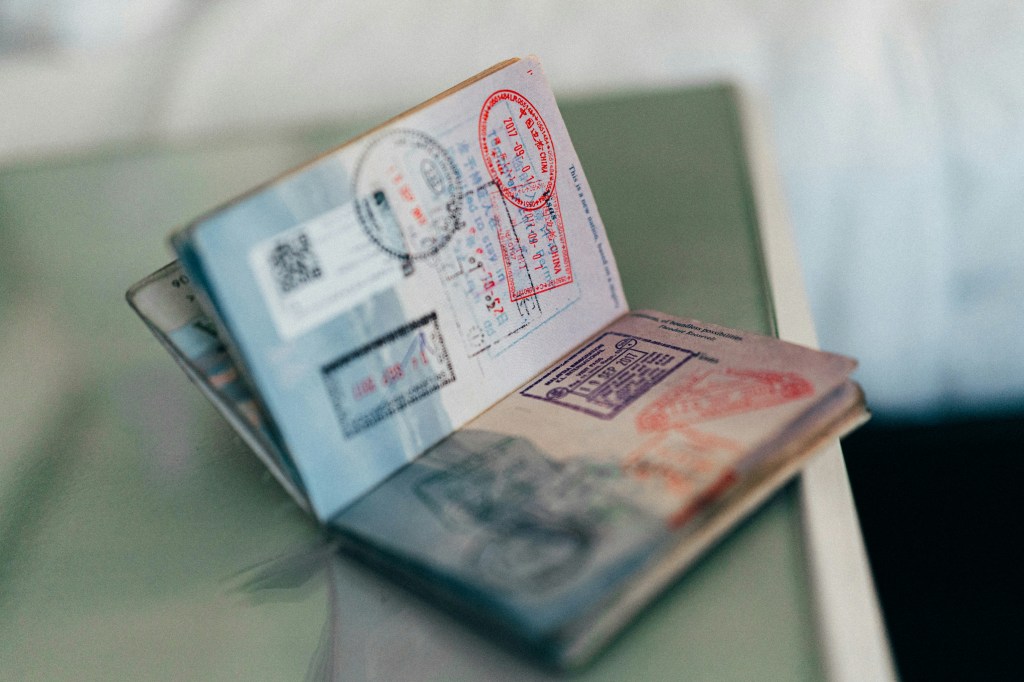
- Valid Passport and Backup Copies
- Make sure your passport is up to date and has at least 6 months before expiration.
- Keep a scanned copy in a secure cloud folder and a physical copy in your go-bag.
- Visas and Entry Documents
- Research visa-free destinations for U.S. passport holders.
- If you have family ties, dual citizenship, or residency abroad, keep those papers accessible.
- Emergency Go-Bag
- Documents: Passport, birth certificate, marriage license, vaccination cards, financial account info, insurance policies.
- Money: A mix of cash (small bills) and at least one internationally-accepted credit card.
- Electronics: Phone, charger, portable power bank, unlocked international SIM card.
- Clothes: Weather-appropriate, versatile layers, and comfortable shoes.
- Medicine: Prescriptions for at least 2–3 months, plus a copy of your medical records.
- Kid Comfort Items: Small toys, stuffed animal, baby wipes, and snacks for travel days.
- Financial Prep
- Set up online banking and a global-friendly credit card (like Chase Sapphire, Capital One, or Amex).
- Consider opening an account with a bank that allows easy international transfers (I use Wise).
- Notify banks of potential international activity.
- Pet Prep
- Paperwork: Rabies certificate, vaccination records, and microchip registration.
- Carrier & Supplies: Airline-approved pet carrier, collapsible bowls, travel food supply.
- Research: Know airline pet policies and quarantine rules in top destinations.
- Backups: Keep a scanned copy of vet documents in your cloud folder.
Preparing Mentally and Logistically
- Keep essentials together. Store important documents in a fireproof folder you can grab quickly.
- Stay informed. Sign up for travel alerts from the U.S. State Department.
- Know your exit points. Even if you don’t plan to leave, knowing where and how you could go brings peace of mind.
Escape Options by U.S. Coast

East Coast
- Nearest international exits: Canada via Maine, Vermont, or New York.
- Flight hubs: JFK (NYC), Logan (Boston), Dulles (DC), and Miami.
- Ferry alternatives: From Florida to the Bahamas or Caribbean.
West Coast
- Nearest international exits: Canada via Washington State or Alaska.
- Flight hubs: LAX (Los Angeles), SFO (San Francisco), SEA (Seattle).
- Ferry alternatives: From Washington to Vancouver Island, Canada.
North (Great Lakes / Midwest)
- Nearest international exits: Multiple land crossings into Canada via MI, MN, ND.
- Flight hubs: Chicago O’Hare (ORD), Detroit (DTW), Minneapolis (MSP).
South (Gulf & Border States)
- Nearest international exits: Mexico by land via Texas, Arizona, California, or New Mexico.
- Flight hubs: Houston, Dallas, Atlanta, Miami.
- Ferry alternatives: New Orleans to Mexico or Caribbean by sea.
Visa-Free Destinations by Length of Stay
(U.S. Citizens)
Up to 1 Year
- Albania – Up to 90 days within 180 days for tourism; previously up to 1 year but now capped at 90 days.
Up to 6 Months
- United Kingdom – U.S. citizens can stay visa-free for up to 6 months as visitors.
- Canada – Generally allows up to 6 months per visit without a visa.
- Mexico – Allows U.S. citizens to stay up to 180 days (6 months) visa-free with a tourist card (FMM).
Up to 90 Days/3 Months (Any 180-Day Period)
(Approximate grouped list—not exhaustive; mostly Schengen + other visa waiver nations)
- Schengen Area (e.g., Austria, France, Germany, Spain, etc.) – 90/180 rule applies.
- United Kingdom – Generally up to 6 months, but best treated as up to 90 days for consistency.
- Brazil – Visa-free until at least April 2025.
- Most of South America (e.g., Argentina, Ecuador, Peru)
- Select Asia (e.g., Japan, South Korea, Malaysia, Singapore)
- Select Africa, Middle East, and Oceania countries offering similar durations.
Typically 30–60 Days
- Caribbean nations (e.g., Bahamas, Jamaica)
- Some Pacific islands (e.g., Fiji, Samoa)
- Many Central American countries
(Exact durations vary. Always confirm with official sites and local sources)
Helpful Notes
- The 90-day / 180-day rule applies broadly across the Schengen Area, meaning travelers can stay up to 90 days in any rolling 180-day window.
- ETIAS (European Travel Authorization) will be required starting late 2026, but only as a security check, not a visa, and it still allows 90-day stays.
Final Thoughts
Preparing to leave the U.S. quickly doesn’t mean you expect the worst. On the contrary, it means you value readiness. Having documents, finances, and pet supplies in order now gives you freedom and reassurance if circumstances ever shift suddenly.
At the end of the day, preparation is power. Whether your exit is a flight, a drive to Canada, or a ferry to Mexico or the Caribbean, knowing your options means you’ll never be caught off guard.
If you’re most concerned about how to finance an international move, check out my recent article on: “How to Finance Your Move Abroad as a Person of Color (Without Draining Your Savings)“
Have additional questions? Need an objective perspective?
Reach out any time and I’ll respond with care — publicly or just between us.
 Lence in Layers