
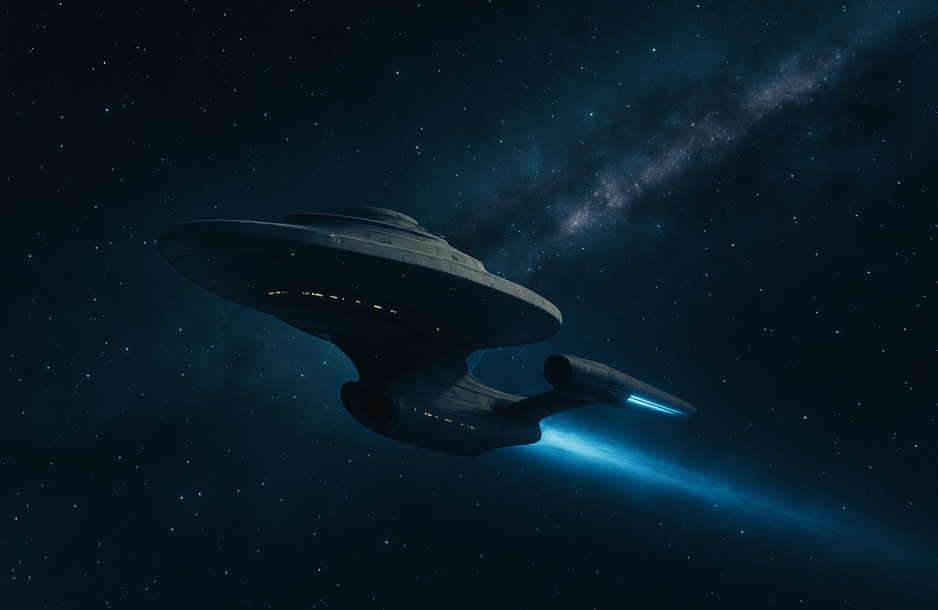
Black Mirror’s USS Callister is more than a sci-fi parody of Star Trek or a showcase of immersive virtual reality. At its core, the episode is a powerful and disturbing critique of toxic entitlement and the sinister side of the so-called “Nice Guy.” Through the character of Robert Daly, the episode explores how niceness can be a mask for deep-rooted misogyny and a desire for control, especially when that niceness is used as currency to demand emotional or romantic reward.
(Season 4, Episode 1 & Season 7, Episode 6)
Who Is Robert Daly?

On the surface, Robert Daly is quiet, brilliant, and overlooked. He co-founded a successful tech company, but is sidelined and dismissed by his colleagues. He sees himself as a victim of their disrespect and cruelty. In the real world, he’s passive, awkward, and seemingly harmless.
But inside his private virtual world, Daly is a god.
In his custom-made digital simulation of the USS Callister, Daly inserts consciousness-cloned versions of his coworkers and forces them to play out his fantasy. Here, he is the powerful, respected captain. Everyone praises him, fears him, and is subjected to his control. He punishes any defiance brutally, often targeting women who challenge his authority or do not submit to his advances and expectations.
The Nice Guy Fallacy
Daly is the archetype of the self-identified Nice Guy—a man who believes that his social awkwardness or perceived kindness entitles him to attention, gratitude, or romantic reciprocation, especially from women. When he doesn’t receive those things, his facade of niceness collapses, revealing bitterness, resentment, and a desire for control.
He doesn’t lash out because he’s been truly wronged—he lashes out because his narrative of being owed something for being “nice” goes unfulfilled.
Digital Misogyny as a Mirror
What makes Daly’s behavior terrifying is not just the power he wields in his simulation—it’s how closely it mirrors real-world patterns. In digital spaces, from forums to gaming servers, men who feel socially invisible or rejected often create toxic environments where they can dominate and humiliate women as a form of catharsis.
USS Callister magnifies this phenomenon, showing how the digital realm becomes a space for retribution and control. Daly doesn’t simply want admiration; he demands submission. He alters his coworkers’ code, strips them of agency, and abuses them under the guise of maintaining a fantasy of harmony.
Niceness Is Not Innocence
The most haunting aspect of Daly is how ordinary he appears. He’s not outwardly violent. He’s not an obvious villain. That’s the danger. The “Nice Guy” trope is so insidious because it disguises control, coercion, and even abuse behind the expectation of being seen as good. Daly doesn’t see himself as an abuser—he sees himself as unappreciated. But that self-image fuels his most monstrous behavior.
Conclusion
USS Callister doesn’t just critique gaming culture or tech escapism. It lays bare the entitlement embedded in the Nice Guy identity—a belief that being kind or gentle earns men access to women’s bodies, admiration, and emotional labor. When that access is denied, some respond not with reflection, but with punishment.
Robert Daly isn’t a misunderstood genius. He’s a cautionary tale. And Black Mirror reminds us that sometimes the most dangerous villains are the ones who believe they are the hero aka “Nice Guy”.
 Lence in Layers